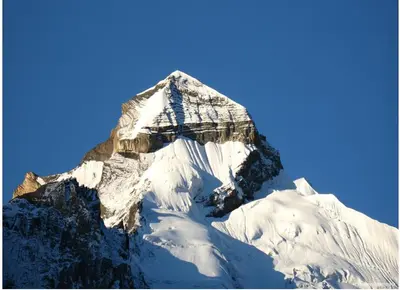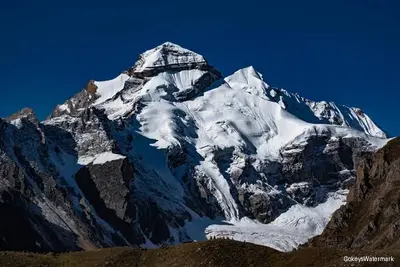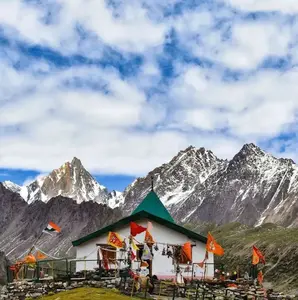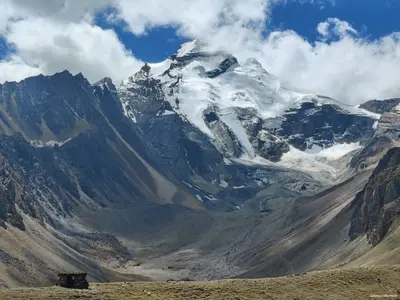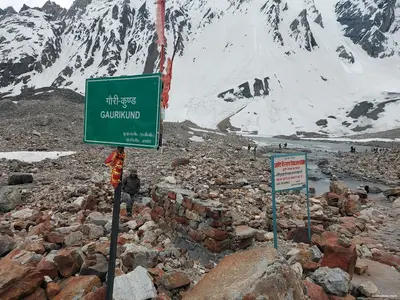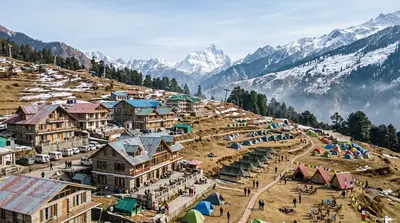
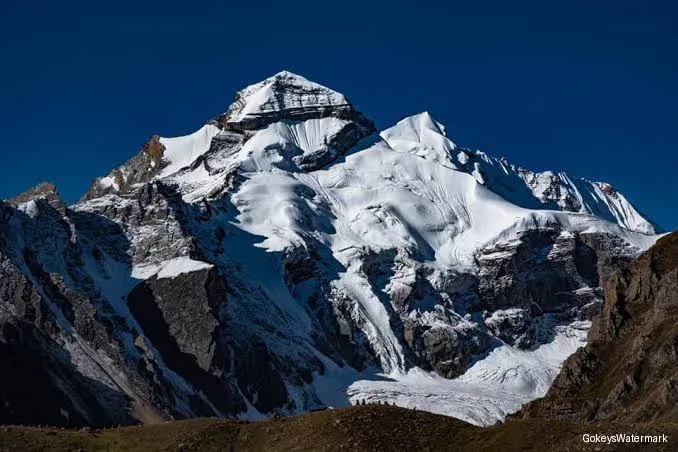
Adi Kailash peak is about 5,945 m (19,500 ft) and Om Parvat is about 6,191 m (20,300 ft) high. Pilgrims do not climb these peaks. You see them from Jolingkong / Parvati Kund (about 4,500 m) and Nabhidhang (about 4,300 m). You will usually sleep at Gunji or Nabi (about 3,200 m). These heights are higher than Kedarnath (3,583 m), so acclimatization matters.
Altitude of each stop on the route
| Place | Approx. altitude (m) | Approx. altitude (ft) | Role on the yatra |
|---|---|---|---|
| Kathgodam | 550 | 1,800 | Railhead |
| Pithoragarh | 1,500 | 4,900 | Night stop |
| Dharchula | 900 | 3,000 | Permit and night stop |
| Budhi | 2,700 | 8,900 | Good rest stop |
| Chhiyalekh | 3,350 | 11,000 | Meadow and checkpost |
| Gunji | 3,200 | 10,500 | Main base, night stay |
| Nabi / Kuti | 3,200–3,800 | 10,500–12,500 | Homestay villages |
| Kalapani | 3,600 | 11,800 | Kali temple, on the way to Om Parvat |
| Nabhidhang | 4,300 | 14,100 | Om Parvat viewpoint |
| Jolingkong / Parvati Kund | 4,500 | 14,800 | Adi Kailash viewpoint |
| Gauri Kund (Adi Kailash) | Higher than Jolingkong | — | Optional steep walk |
| Adi Kailash peak | 5,945 | 19,500 | Seen, not climbed |
| Om Parvat peak | 6,191 | 20,300 | Seen, not climbed |
Altitudes are rounded; different maps give slightly different figures.
Why altitude matters
At 4,500 m there is about 40% less oxygen in each breath than at sea level. The road makes it easy to go up too fast: you can drive from 900 m at Dharchula to 3,200 m at Gunji in one day, and then to 4,500 m the next morning. Your body needs time to adjust.
Acute Mountain Sickness (AMS) is common above 2,500 to 3,000 m. Signs include:
- Headache
- Nausea or loss of appetite
- Tiredness and weakness
- Dizziness
- Poor sleep
Serious warning signs (go down immediately and get medical help):
- Breathlessness even at rest, or a wet cough (possible fluid in the lungs, HAPE)
- Confusion, unusual behaviour, loss of balance (possible brain swelling, HACE)
- Extreme drowsiness or bluish lips
How to acclimatize on the Adi Kailash yatra
- Do not rush from Dharchula to Jolingkong. Sleep at least one night at Gunji or Nabi before visiting Jolingkong.
- Add a night at Budhi (2,700 m) if you are a senior, a first-timer at altitude, or felt unwell at Kedarnath or similar places.
- "Climb high, sleep low." Visit Jolingkong and Nabhidhang as day trips and come back to sleep at Gunji.
- Walk slowly at the viewpoints. Do not run, and do not rush up to Gauri Kund.
- Drink 3 to 4 litres of water a day. Avoid alcohol and smoking.
- Eat light, warm, carb-rich food.
- Keep warm. Cold makes altitude symptoms worse.
- Ask your doctor about altitude medicine before the trip. Do not take any medicine without medical advice.
Use a pulse oximeter
A small fingertip pulse oximeter is cheap and useful. At Gunji, readings of about 85 to 92% are common in healthy people. If someone reads much lower than others in the group and also has symptoms, take it seriously and descend.
Who is at higher risk?
- People who have had altitude sickness before
- Those with heart or lung disease
- People who go up too fast
- Those who are dehydrated or exhausted
- Fitness does not protect you; young, fit people get AMS too
Medical help on the route
There are basic health facilities at Dharchula and some health screening at Gunji in season, but serious care is far away. The nearest well-equipped hospitals are in Pithoragarh and Haldwani. In an emergency call 112 and 108. This is why the permit requires a medical fitness certificate.
Plan a safe yatra
We build rest nights into our Adi Kailash itineraries. Read the full Adi Kailash yatra guide and the age and fitness guide, or contact us.