
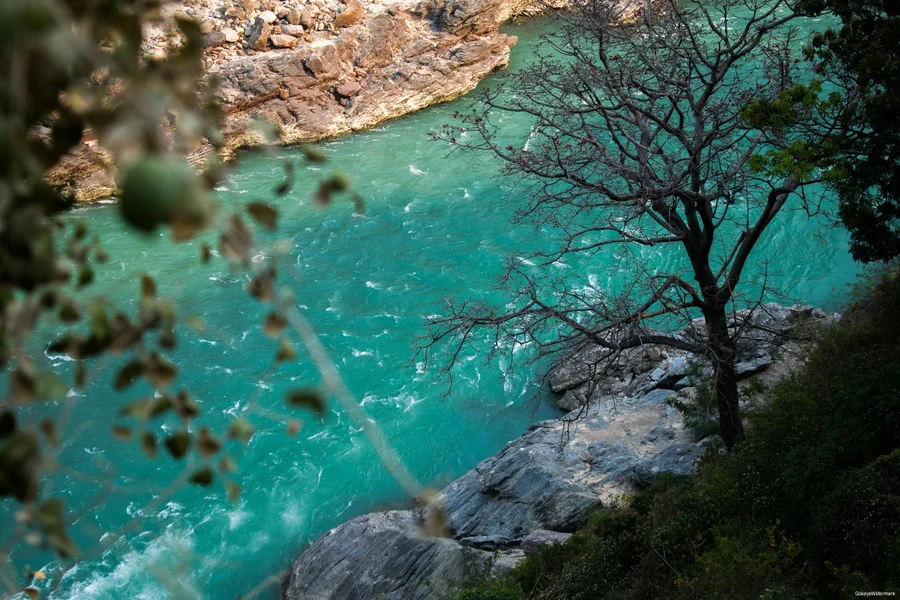
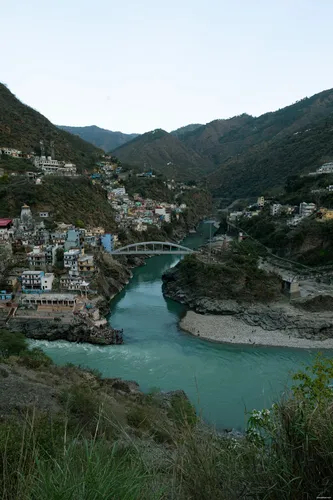
On the long drive to Badrinath, there is a point where the green waters of the Pindar river meet the Alaknanda. This is Karnaprayag, the third of the five sacred confluences, or Panch Prayag, along the Alaknanda. Most cars rush through it. Those that stop find an easygoing town with old temples, a lively bazaar and, for many families, the perfect place to break a long mountain journey.
You will also see it spelled Karanprayag. Both names refer to the same town in Chamoli district.
Karnaprayag at a glance
| Planning point | What to know |
|---|---|
| Location | Chamoli district, Garhwal, Uttarakhand |
| Rivers | Alaknanda and Pindar |
| Position in Panch Prayag | Third, after Vishnuprayag and Nandprayag when counted from upstream |
| Known for | Sangam, Uma Devi Temple, Karna Temple |
| Best used as | A sightseeing halt or an overnight break on the Badrinath highway |
| Nearby | Gauchar, Nandprayag, Adi Badri, Nauti |
Why Karnaprayag is special
According to local tradition, Karna, the great warrior of the Mahabharata, meditated here and was blessed by Surya, the Sun God, with his famous armour and earrings. The town is named after him. Another belief holds that Goddess Uma (Parvati) appeared here, and the Uma Devi Temple is one of the oldest shrines in town.
These stories are part of faith and local heritage. Alongside them is the simple natural beauty of two rivers meeting in a mountain valley, which is reason enough to stop.
Places to visit in Karnaprayag
Karnaprayag Sangam
The confluence is the town's main attraction. Pilgrims take holy water or perform small rituals at the ghats when conditions allow. River levels change a lot, especially after rain, so use only designated ghats and viewpoints, stay behind barriers and never step onto wet rocks for a photo.
Uma Devi Temple
An old temple dedicated to Goddess Uma, near the confluence. It is an important shrine for local families and a peaceful stop for travellers. Check the darshan timings locally.
Karna Temple
A small temple linked with the legend of Karna. Visiting it along with Uma Devi Temple makes a short, meaningful temple walk.
The bazaar
Karnaprayag is a busy market town for the surrounding villages. A walk through the bazaar is a good chance to pick up snacks, warm clothes or local produce, and to have a hot meal before continuing up the highway.
Places worth a detour
Adi Badri
A group of ancient temples dedicated to Lord Vishnu, believed by some to be among the earliest places of Badri worship. It lies on the road towards Gairsain, so it is a separate drive, not something you can walk to from Karnaprayag. Plan a few extra hours if you want to include it.
Nauti village
Nauti is closely linked with the Nanda Devi Raj Jat, a long Himalayan pilgrimage held roughly once every twelve years. Outside that event it is a quiet village, best for travellers interested in Garhwali culture.
Gauchar and Nandprayag
Gauchar, just before Karnaprayag on the highway, has a wide open ground famous for its annual fair. Nandprayag, a short way ahead, is the next confluence where the Nandakini joins the Alaknanda.
How Karnaprayag fits into your journey
From Haridwar and Rishikesh, the highway towards Badrinath passes Devprayag, Srinagar, Rudraprayag and Gauchar before reaching Karnaprayag. It then continues to Nandprayag, Chamoli and Joshimath.
Karnaprayag is also the planned terminus of the Rishikesh–Karnaprayag railway line. Until passenger trains are actually running on the full route, road travel remains the way to get here, so check the current status before planning a train journey.
Option 1: A short sightseeing halt
Stop for the sangam viewpoint and a temple, have tea or lunch, and continue. This adds an hour or two to your day. Agree on the stop with your driver in advance so it is part of the plan, not a rushed detour.
Option 2: An overnight break
Karnaprayag is roughly halfway between Haridwar and Badrinath, which makes it a sensible overnight stop. Families with elderly members often find that splitting the drive here makes the whole yatra far more comfortable. You arrive in daylight, rest well and reach Joshimath or Badrinath fresh the next day.
Best time to visit Karnaprayag
Karnaprayag is at a lower altitude than Joshimath or Badrinath, so it is milder for most of the year.
- March to June: warm days, pleasant evenings; busy with Badrinath pilgrims from late April or May.
- July to September: monsoon brings landslide risk on the highway and high river levels. Keep buffer days and stay away from the river edge.
- October to November: clear skies and comfortable temperatures; a lovely time to travel.
- December to February: cool, generally accessible, but the higher places on the route (Badrinath, Auli) may be closed or snowbound.
If Karnaprayag is part of a Badrinath trip, the temple's opening season will decide your dates. For 2026, Badrinath closes on 16 November.
Where to stay in Karnaprayag
The town has budget hotels, mid-range properties and some riverside stays. Choose by:
- Location relative to the highway, so you can leave easily next morning
- Parking and vehicle access
- Stairs between parking and your room
- Hot water and evening meals
A river-view photo is nice, but a quiet room with easy access is often more valuable after a long drive.
Food and practical tips
You will find simple North Indian and local Garhwali food in the bazaar. Travellers with dietary requirements should tell their driver in advance so a suitable lunch stop can be planned. Keep a warm layer handy for the onward drive, carry essential medicines, and avoid planning a train or flight right after a long mountain transfer.
Add Karnaprayag to your journey
Ask us to include a Karnaprayag stop in your Badrinath tour or Char Dham Yatra from Haridwar. Tell us whether you prefer a short visit or an overnight break, and we will plan the route around it. For the full set of confluences, read our Panch Prayag route guide.