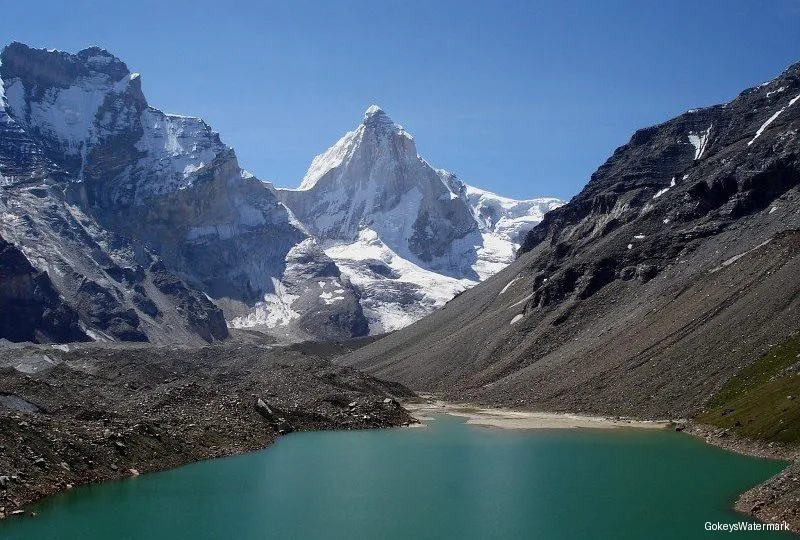
Perched at a breathtaking 5,230 meters in the heart of the Garhwal Himalayas, Kagbhusandi Lake remains one of Uttarakhand's most spectacular yet lesser-known trekking destinations. This emerald jewel, cradled within the Nanda Devi National Park—a UNESCO World Heritage Site—offers adventurers an extraordinary journey through untouched alpine landscapes, ancient mythology, and some of the most magnificent Himalayan vistas you'll ever witness.
Unlike crowded tourist trails, the Kagbhusandi Lake trek rewards those willing to push their limits with solitude, pristine natural beauty, and the kind of transformative mountain experience that stays with you forever. With towering peaks like Chaukhamba, Neelkanth, and Hathi Ghoda forming a dramatic amphitheater around its turquoise waters, this high-altitude lake near Kankul Pass promises an adventure that combines physical challenge with spiritual wonder.
Whether you're an experienced trekker seeking your next Himalayan conquest or a mountain enthusiast drawn to remote, unspoiled destinations, this comprehensive guide covers everything you need to know about planning and completing the Kagbhusandi Lake trek successfully.
Why Kagbhusandi Lake Deserves a Spot on Your Bucket List
Spectacular Mountain Panoramas
The trek offers unobstructed views of some of the Garhwal Himalayas' most iconic peaks. The majestic Chaukhamba massif (7,138m), the pyramidal Neelkanth (6,596m), Hathi Peak, and the twin summits of Nar Narayan create a 360-degree panorama that's nothing short of awe-inspiring. During sunrise and sunset, these giants glow in shades of pink, orange, and gold—moments that no photograph can truly capture.
Pristine Wilderness Experience
Located within the Nanda Devi Biosphere Reserve, this trek takes you through one of India's most ecologically significant regions. You'll traverse dense rhododendron forests, vast alpine meadows carpeted with wildflowers, and stark glacial landscapes where few humans venture. The biodiversity here includes Himalayan black bears, snow leopards, musk deer, and over 100 bird species.
Rich Mythological Heritage
Kagbhusandi Lake isn't just a geographical marvel—it's steeped in ancient Hindu mythology. The name "Kagbhusandi" derives from Sanskrit, where "Kag" means crow and "Bhusandi" refers to a mythological sage. According to local legends, this lake was home to the sage Kagbhusandi, who possessed eternal life and witnessed multiple cycles of creation and destruction.
Another fascinating tale speaks of a Brahmin from Ayodhya who was cursed by a sage. At this sacred lake, he found redemption when a crow appeared and revealed divine wisdom. Two prominent boulders near the lake resemble a crow and an eagle, believed to be eternal witnesses to this ancient event. Even today, locals report unusual concentrations of crows near the lake, adding to its mystical aura.
Cultural Immersion
The trek passes through remote mountain villages where Garhwali culture thrives in its most authentic form. Interact with shepherds and villagers whose lives remain largely unchanged by modern civilization. Their warm hospitality, traditional knowledge of the mountains, and stories passed down through generations enrich the trekking experience beyond measure.
Trek Difficulty and Who Should Attempt It
Difficulty Level: Moderate to Difficult
The Kagbhusandi Lake trek is not for beginners. Here's what makes it challenging:
- High Altitude: Reaching 5,230 meters requires excellent acclimatization
- Technical Sections: Steep ascents and descents, particularly near Kankul Pass
- Rocky Terrain: Loose scree, boulder fields, and narrow mountain trails
- Duration: 7-day commitment with long walking hours (6-8 hours daily)
- Weather Unpredictability: Sudden temperature drops and potential snowfall even in summer
- Limited Infrastructure: No tea houses or lodges; completely self-supported camping trek
Ideal Trekker Profile:
- Previous high-altitude trekking experience (preferably above 4,000m)
- Good cardiovascular fitness and leg strength
- Mental resilience for challenging conditions
- Age range: 18-55 years (with medical clearance for older trekkers)
- Not suitable for children under 15
Fitness Preparation Tips:
Start training at least 6-8 weeks before your trek:
- Cardiovascular Endurance: Run or cycle 5-6 times weekly, gradually increasing to 45-60 minutes per session
- Strength Training: Focus on legs (squats, lunges, calf raises) and core (planks, mountain climbers)
- Stair Climbing: Practice with a 5-7 kg backpack to simulate trekking conditions
- Practice Treks: Complete at least 2–3-day hikes with elevation gain before attempting this trek
- Breathing Exercises: Pranayama and deep breathing improve oxygen efficiency at altitude
Expert Insight: "The biggest mistake I see is trekkers underestimating the altitude impact," says Rajeev Negi, a veteran mountain guide with 15 years of Garhwal experience. "Even fit individuals can struggle above 4,500 meters. Proper acclimatization and knowing when to turn back are crucial."
Detailed Trek Itinerary: Day-by-Day Breakdown
Day 1: Haridwar to Govindghat (291 km, 10-11 hours)
Begin your journey from the holy city of Haridwar, gradually ascending through the Alaknanda Valley. The route passes through Devprayag (confluence of Alaknanda and Bhagirathi rivers), Rudraprayag, Karnaprayag, and Joshimath—each town offering glimpses of Garhwali culture and stunning river valleys.
Altitude: Haridwar (310m) → Govindghat (1,828m)
Overnight: Guesthouse in Govindghat
Key Stop: Lunch break at Rudraprayag or Karnaprayag
Local Tip: Stock up on any last-minute supplies in Joshimath, as it's the last town with proper shops before the trek begins.
Day 2: Govindghat to Ghangaria (Roop Dhungi) via Bhyundar Village (12 km, 6-7 hours)
The actual trekking begins! From Govindghat, follow the same initial trail as the Valley of Flowers trek. Cross the Laxman Ganga on a sturdy bridge and begin a steady uphill climb through mixed forests of pine, oak, and bamboo.
Altitude Gain: 1,828m → 3,050m
Trail Character: Well-defined path, moderate gradient
Overnight: Camping at Roop Dhungi (Ghangaria)
The village of Ghangaria serves as a base for both Valley of Flowers and Hemkund Sahib treks, so you'll find basic facilities here including small eateries and a Gurudwara.
Photography Spot: The confluence point where Pushpawati and Laxman Ganga rivers meet offers dramatic views.
Day 3: Ghangaria to Raj Kharak via Samartoli (14 km, 7-8 hours)
Today marks your departure from established trails into true wilderness. The path climbs steadily through enchanting rhododendron forests that explode with red and pink blooms in spring. Cross alpine meadows where you might spot Himalayan monal pheasants and grazing bharal (blue sheep).
Altitude Gain: 3,050m → 4,100m
Trail Character: Gradual ascent, well-grassed meadows
Overnight: Camping at Raj Kharak
Raj Kharak is a beautiful high-altitude campsite surrounded by mountains on all sides. The temperature drops significantly here, so prepare for a cold night.
Acclimatization Tip: Arrive early, set up camp, and spend the afternoon doing short walks around the campsite. Drink plenty of water and avoid alcohol.
Day 4: Raj Kharak to Kagbhusandi Lake via Kankul Pass (8 km, 5-6 hours)
Summit day! This is the most challenging and rewarding section. The trail becomes steep and rocky as you approach Kankul Pass (approximately 4,900m). The final approach to the pass involves scrambling over boulders and navigating loose scree.
Altitude Gain: 4,100m → 5,230m
Maximum Altitude: 5,230m at the lake
Trail Character: Steep, rocky, technical sections
Overnight: Camping near Kagbhusandi Lake
From Kankul Pass, the emerald waters of Kagbhusandi Lake appear like a mirage. The descent to the lake is steep but manageable. Spend the afternoon exploring the lake shores, observing the legendary boulders, and soaking in the 360-degree mountain views.
Safety Note: Start early (by 5 AM) to avoid afternoon weather changes. Carry trekking poles for stability on loose terrain.
Day 5: Kagbhusandi Lake to Gouncha Udiyar (8 km, 4-5 hours)
After witnessing sunrise over the lake—an absolute must—begin your descent. Retrace your steps over Kankul Pass, then take a different route toward Gouncha Udiyar, another scenic camping location.
Altitude Loss: 5,230m → 3,700m
Trail Character: Steep descent, easier than ascent
Overnight: Camping at Gouncha Udiyar
The descent provides different perspectives of the peaks you climbed past. Your body will feel the relief of lower altitude.
Day 6: Gouncha Udiyar to Govindghat via Panika (10 km trek + 7 km drive)
Trek down to Panika village, where you'll meet your vehicle for the drive back to Govindghat. The trail passes through traditional Garhwali settlements where you can observe local agricultural practices and traditional architecture.
Altitude Loss: 3,700m → 1,828m
Overnight: Guesthouse in Govindghat
Cultural Experience: If time permits, visit the small village temples and interact with locals who maintain centuries-old traditions.
Day 7: Govindghat to Haridwar (291 km, 10-11 hours)
Return journey to Haridwar, marking the end of your Kagbhusandi adventure. Use this time to reflect on the incredible journey and share stories with fellow trekkers.
Pro Tip: Break the journey at Rishikesh for a relaxing Ganga Aarti at Parmarth Niketan or Triveni Ghat before heading to Haridwar.
Best Time to Trek to Kagbhusandi Lake
Summer Season (May to June)
Pros:
- Stable weather with minimal rainfall
- Clear mountain views
- Comfortable daytime temperatures (10-15°C at lower altitudes)
- Wildflowers in full bloom along the trail
- Longer daylight hours for trekking
Cons:
- Nighttime temperatures can drop to -5°C near the lake
- Higher trekker traffic (though still relatively quiet)
- Snow patches may remain on north-facing slopes
Best For: First-time high-altitude trekkers, photography enthusiasts
Post-Monsoon (September to October)
Pros:
- Crystal-clear post-rain atmosphere
- Exceptional visibility for mountain photography
- Fresh, vibrant vegetation
- More stable snow conditions
- Fewer crowds than summer
Cons:
- Colder temperatures, especially in October
- Possible early snowfall in late October
- Shorter daylight hours
Best For: Experienced trekkers seeking solitude, landscape photographers
Months to Avoid:
- July-August: Heavy monsoon rains cause landslides, trail erosion, and leeches
- November-April: Extreme cold, deep snow, and dangerous avalanche conditions make the trek impossible
Local Weather Insight: "June is ideal because the snow has mostly melted, making the pass crossable, but the monsoon hasn't arrived yet," advises Bharat Singh, a local guide from Joshimath. "September offers the clearest skies but be prepared for colder nights."
How to Reach the Trek Starting Point
By Air
Jolly Grant Airport, Dehradun (nearest airport, 277 km from Govindghat)
- Well-connected to Delhi, Mumbai, and Bangalore
- From airport: Hire taxi to Govindghat (8-9 hours, ₹4,000-6,000)
- More comfortable than road journey from Delhi
By Train
Haridwar Railway Station (291 km from Govindghat)
- Major railhead connected to all Indian cities
- From station: GMOU buses or shared taxis to Joshimath/Govindghat
- Journey time: 10-11 hours
Rishikesh Railway Station (273 km from Govindghat)
- Alternative option with similar connectivity
- Slightly shorter drive to Govindghat
By Road
From Delhi: 500 km to Govindghat (14-15 hours)
- Route: Delhi → Haridwar → Rishikesh → Devprayag → Rudraprayag → Karnaprayag → Joshimath → Govindghat
- Regular buses from ISBT Kashmiri Gate
From Dehradun: 290 km (9-10 hours)
From Rishikesh: 273 km (9-10 hours)
- GMOU (Garhwal Motor Owners Union) buses depart early morning
- Private taxis available (₹5,000-8,000)
Driving Tip: The roads are winding mountain highways. If driving yourself, be comfortable with hill driving and start early to avoid driving in darkness.
What Makes Kagbhusandi Different from Other Himalayan Treks
Compared to Valley of Flowers
While both start from Govindghat, Kagbhusandi is:
- More challenging (5,230m vs 3,658m)
- Less crowded
- Requires complete self-sufficiency
- Offers high-altitude lake experience
- Takes longer (7 days vs 4-5 days)
Compared to Roopkund Trek
- Similar difficulty level
- Kagbhusandi has better mountain views
- More pristine and remote
- Roopkund is more famous for its skeletal lake
- Both require good fitness and acclimatization
Compared to Goecha La Trek (Sikkim)
- Kagbhusandi reaches higher altitude
- Less commercial infrastructure
- More cultural immersion in Garhwali villages
- Goecha La offers Kanchenjunga views; Kagbhusandi showcases Garhwal giants
Local Culture and Etiquette
Respecting Mountain Communities
The villages along this route follow traditional Garhwali customs:
- Temple Etiquette: Remove shoes before entering temples; ask permission before photographing
- Dress Modestly: Wear appropriate clothing in villages (avoid shorts and sleeveless tops)
- Photography Ethics: Always ask before photographing locals
- Fair Exchange: Pay fairly for services; don't bargain excessively with villagers who have limited income
- Language: Learning basic Hindi phrases helps; locals appreciate the effort
Traditional Garhwali Hospitality
Don't be surprised if villagers invite you for tea. This is part of their legendary hospitality. Accepting graciously (and offering small gifts or compensation) builds cultural bridges.
Wildlife You Might Encounter
The Nanda Devi Biosphere Reserve harbors incredible biodiversity:
Mammals:
- Himalayan black bear
- Snow leopard (extremely rare sighting)
- Musk deer
- Bharal (blue sheep)
- Himalayan tahr
- Red fox
- Yellow-throated marten
Birds:
- Himalayan monal (state bird of Uttarakhand)
- Snow partridge
- Golden eagle
- Lammergeier (bearded vulture)
- Himalayan griffon
- Alpine chough
Safety with Wildlife:
- Make noise while trekking to avoid surprising animals
- Never approach or feed wildlife
- Store food securely at campsites
- If you encounter a bear, back away slowly; don't run
Start Your Kagbhusandi Lake Adventure Today
The Kagbhusandi Lake trek isn't just another high-altitude journey—it's an immersion into one of the Himalayas' most sacred and untouched landscapes. From the emerald waters of the lake reflecting towering peaks to the ancient legends whispered by mountain winds, every moment on this trail connects you to something greater than yourself.
This trek demands preparation, respect for the mountains, and physical endurance, but it rewards you with experiences that transform how you see the world. The silence of 5,000-meter altitude, the raw beauty of untouched wilderness, and the warmth of Garhwali hospitality create memories that last a lifetime.
Ready to answer the call of the Garhwal Himalayas? Whether you're an experienced high-altitude trekker or ready to push your boundaries, the Kagbhusandi Lake trek awaits. Don't attempt this journey alone—book with experienced local operators who know these mountains intimately and prioritize your safety above all.
Contact reputable trekking companies, start your fitness preparation, and get ready for one of the most rewarding adventures in the Indian Himalayas. The emerald waters of Kagbhusandi are calling—will you answer?
Book your 2026 trekking season spot now. Spaces are limited, and the best trekking companies fill up months in advance for this exclusive high-altitude adventure.
Last Updated: Dec 2025