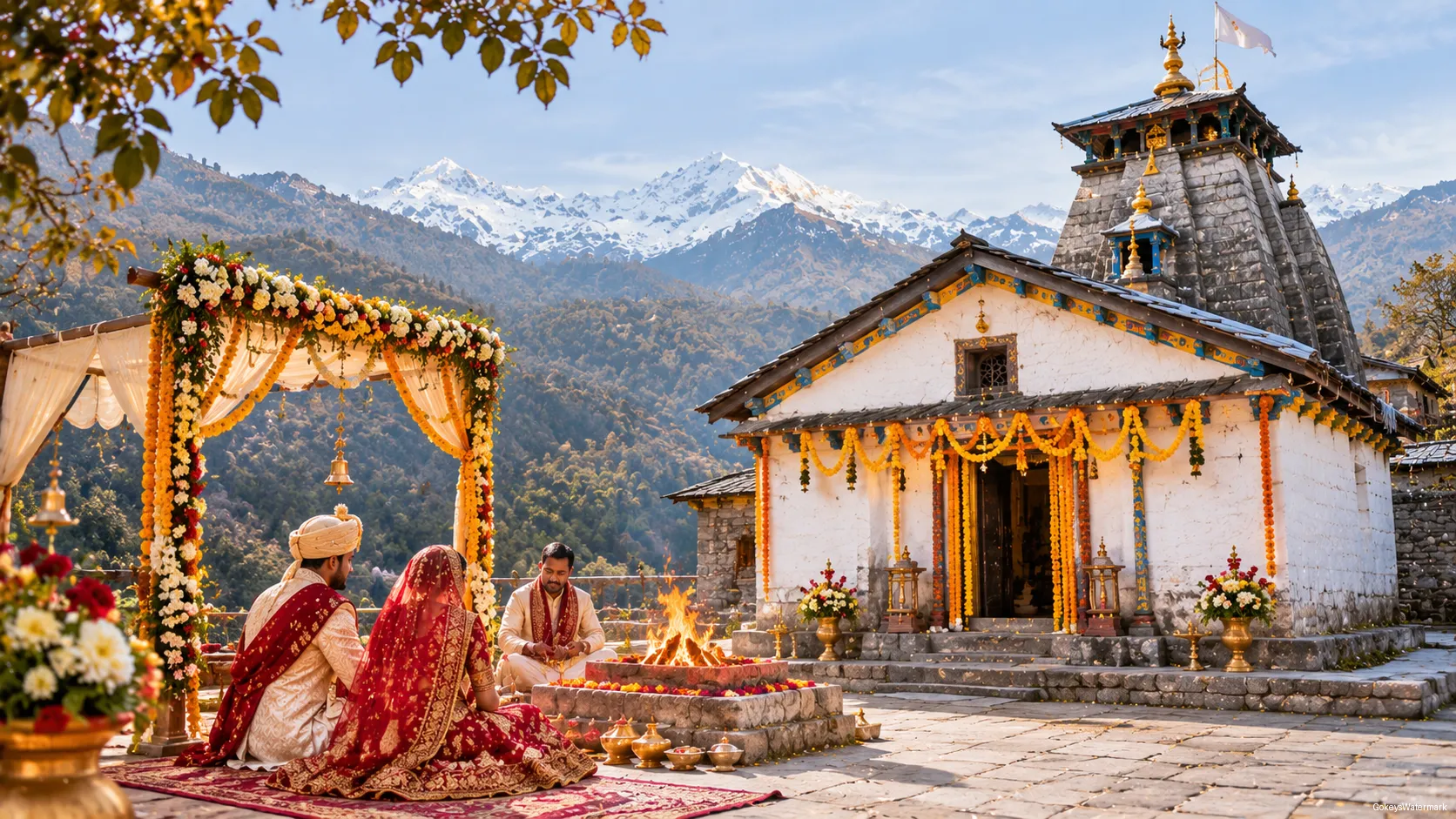
Search for the cost of a wedding at Triyuginarayan and you will find numbers that do not agree with each other. One page says a package starts around fifty thousand rupees. Another says four lakh. A third says twelve. None of them is lying, exactly. They are describing different weddings: ten people or a hundred, one night or three, a basic lodge or a comfortable hotel, a priest and nothing else or a full set of décor, food and photography.
This post is meant to cut through that. Instead of handing you one number that will not match your wedding, it explains what goes into the cost of a Triyuginarayan temple wedding, what published packages typically include, and how to build a budget that fits your own guest list. If you have not yet read our main guide, start with the complete guide to a Triyuginarayan temple wedding, which explains the temple, the season and the limits on guest numbers.
Why the published numbers are all over the place
Three things make temple wedding prices unusually hard to compare.
First, the scale is small but the variety is large. A couple marrying with immediate family is a very different cost from a wedding party of fifty. Second, there are two kinds of cost mixed together on most pages: what you pay to the temple and priest, and what you pay for the trip around the wedding, meaning stay, food and travel. Some packages cover both, some only one, and the page rarely says clearly which. Third, the location itself changes things. Triyuginarayan is a long way from the plains, the valley has limited lodging and the season is short, so prices for rooms, cars and caterers behave differently from a resort town like Rishikesh.
So when you see a headline price, ask one question first: what exactly is in it?
The ranges you will see
The figures below come from published packages and listings, and they are indicative only. They are useful for getting a feel for the market, not for budgeting to the rupee.
| What is being described | Range commonly seen |
|---|---|
| Small all-inclusive packages for a few people | Online listings start near fifty thousand rupees, but a real 2-night, 3-day wedding trip rarely comes that low |
| Wedding packages from tour operators | Roughly one lakh to under five lakh rupees depending on inclusions |
| Per-person trip prices (3 nights, 2 days, with the wedding) | Low tens of thousands of rupees per person |
| Larger parties of fifty to a hundred or more | Several lakh rupees, sometimes well above ten lakh with décor and catering |
| Temple booking and committee registration | Approximately ₹30,000, higher if wedding puja items are included; pandit fees are extra |
The last row is the one to anchor on, because it is the actual booking cost at the temple. Rules for temple weddings are still being worked out, so confirm the current amount with the temple side before you pay.
What the trip really costs in the Sitapur and Guptkashi belt
Here is how the main numbers usually work out for wedding parties staying in the Sitapur and Guptkashi belt. They are approximate, and they move with the hotel category and what you choose to include.
- Temple wedding booking: approximately ₹30,000. It can go higher if wedding puja items are included, and the pandit's fee is extra, as applicable.
- Stay with meals: deluxe hotels in the Sitapur or Guptkashi belt generally come to about ₹2,000–3,000 per person per day, which covers the stay, all meals and snacks. Higher-category hotels push this up, and budget hotels bring it down.
- Decoration and mehendi ceremony: about ₹1,20,000, though it depends on what the family chooses to include.
Why the total does not come to fifty thousand. The usual trip is two nights and three days: the party leaves Haridwar and spends the first night in Sitapur, the wedding takes place on the second day, and the party returns on the third day. Even that short plan carries stay, meals, vehicles, the temple booking and the pandit. A family that wants a proper mehendi ceremony adds one more day, with the extra stay and the arrangements that go with it.
The own-kitchen option. Some families booking through a travel agent bring their own kitchen and cooks. They take only the accommodation from the hotel and make their own food arrangements in space the hotel provides. This can lower the food cost, but space and hall charges still apply, so ask the hotel for them in writing before you decide.
What goes into the cost
A Triyuginarayan wedding budget is easiest to understand as seven blocks. Look at each one and decide what you need.
1. Temple and ritual costs. These cover the priest, the materials for the puja and sacred fire, and any fee or registration the temple requires. You must confirm them directly with the temple side and not take them from a brochure.
2. Accommodation. This is often the biggest single block. Hotels and lodges in Guptkashi, Sitapur, Phata and Sonprayag range from simple to comfortable. The more guests, the more rooms, and the more nights, the larger this becomes. In winter, rooms with proper heating are worth paying for. Our post on where to stay on a Kedarnath yatra describes the same base towns.
3. Transport. The valley is a long drive from the plains. A party travelling from Delhi, Haridwar or Rishikesh needs cars or a tempo traveller or small coach for the journey, plus local movement between hotel and temple. For a larger group, this block grows quickly. You can look at our cab services for the vehicle types we offer.
4. Food. Meals for the wedding party across the stay, plus a wedding meal on the day. In small hill lodges, catering is simple, and a special wedding menu needs a caterer who can bring supplies and cook on site.
5. Décor, flowers and photography. Temple weddings are less about décor than resort weddings, but many families still want flowers, a decorated mandap setting where it is permitted, and a photographer. Proposed norms have talked about limiting certain elements such as drones, so confirm what is allowed before you book anyone.
6. Wedding outfits and the extras. Clothes, jewellery and so on are outside any package, but families often forget to budget for warm layers worn under or over wedding outfits for the cold months.
7. Contingency. Weather in the hills can add a night to a trip. A buffer of around ten to fifteen percent of the total is sensible.
A way to estimate your own budget
Without inventing numbers for you, here is a simple method that works.
Start with the number of people and nights. Multiply by a realistic nightly rate for rooms at the standard you want, adding any extra rooms for elders and the couple. Add the cost of vehicles for the whole journey, including the return. Add food per person per day. Then add a line for the ritual, décor and photography you want. Finally add the contingency.
If you want, we will do this for you. Send us your guest count, preferred months and the standard of stay you have in mind, and we will return a written plan with a quote for the travel and stay side. You can reach us through the contact page.
Three sample shapes of wedding, and how their costs behave
We are deliberately not attaching prices to these. They are meant to show how the main cost drivers change.
A very small wedding. The couple, parents and a handful of close relatives, roughly ten to fifteen people, travelling for three nights. Accommodation and transport dominate. The ritual is simple and the décor minimal. This is the shape that fits the lower end of published ranges.
A family wedding. Twenty-five to forty people, three to four nights, comfortable rooms in Guptkashi, a tempo traveller or two from the plains, a modest décor and a photographer. Here, accommodation and transport are still the largest blocks, but food and décor start to add meaningfully.
A larger party. Fifty or more, which may stretch what the temple can accommodate in terms of guest numbers. If your guest list is this large, it is worth asking whether the wedding at the temple should be limited to the immediate family and a larger celebration held in Rishikesh or Dehradun. This usually gives a better experience for everyone, and a better budget.
Ways to keep the cost sensible
- Travel in shoulder months. March and April are milder than the deep winter and often less pressured than the peak wedding dates.
- Keep the guest list to those who truly need to be there. At a village temple, every extra guest adds a room, a seat in a car and a meal.
- Share vehicles. A single tempo traveller is cheaper per head than several separate cabs and much easier to coordinate.
- Choose comfortable but not luxurious stays. In the valley, location and heating matter more than star ratings.
- Do the big celebration elsewhere. A reception in a city with proper venues is usually cheaper than trying to recreate one in the valley.
- Book early. Last-minute rooms and vehicles in the season are both scarcer and dearer.
What a Gokeys package includes, and what it does not
We plan Triyuginarayan weddings as complete trips. What we deliver ourselves is the trip plan, vehicles for the whole party from Delhi, Haridwar or Rishikesh, hotel selection and room blocks, pickups and drops, and on-ground coordination through the days of the wedding. What we arrange through partners is the priest and ritual materials, décor and flowers, catering, and photography and videography, with us managing them on your behalf.
We do not set or collect temple fees on behalf of the temple, and we do not replace your own confirmation of permissions with the temple committee. We help you prepare and ask the right questions.
Because every wedding party is different, we do not publish a fixed price. We prepare a written quote after we know your dates, numbers and standard of stay. To see how a booking works from the temple side, read our guide on how to book a wedding at Triyuginarayan temple.