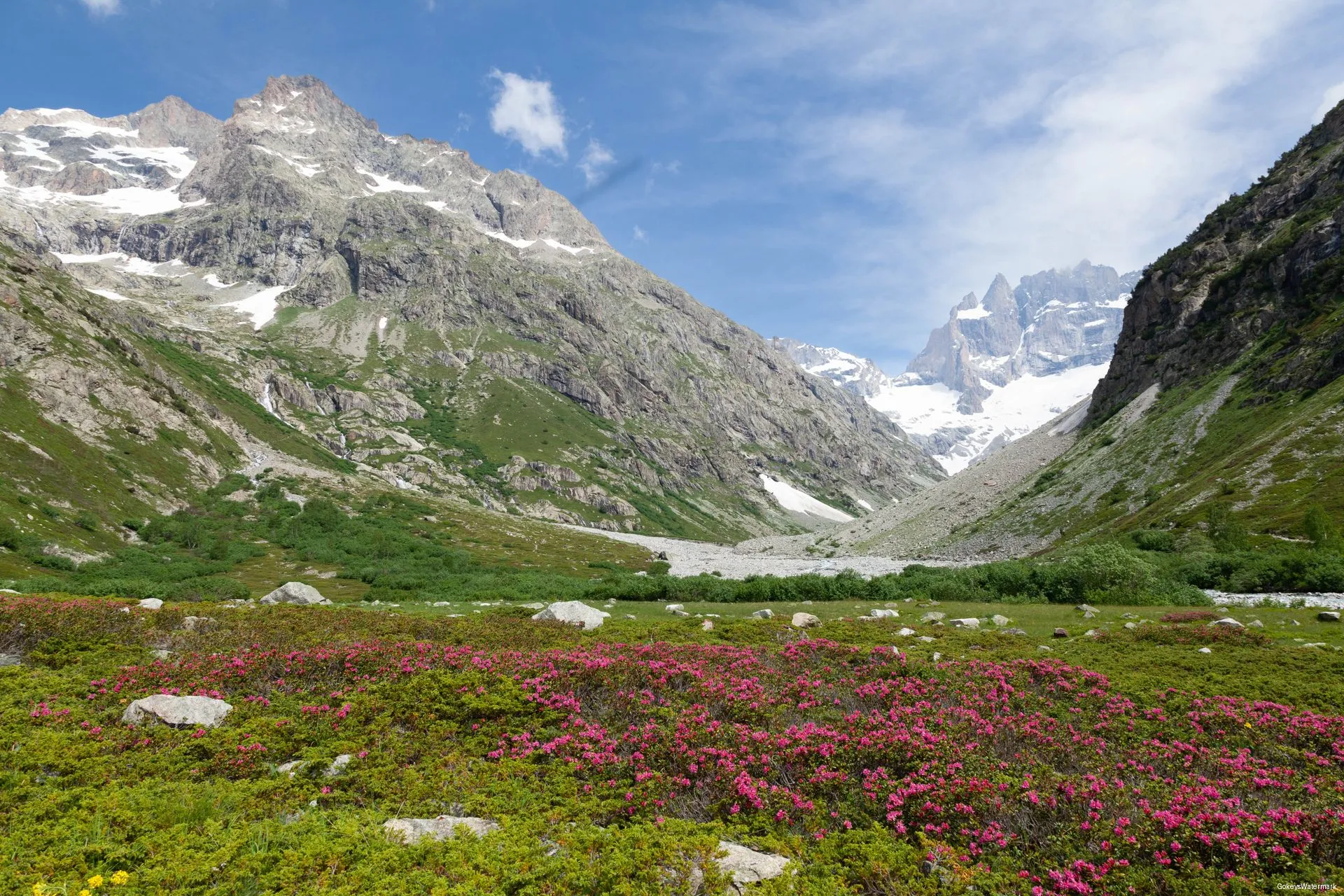
The Valley of Flowers is a high Himalayan valley in Chamoli district that fills with hundreds of kinds of wildflowers every monsoon. It lies between about 3,350 and 3,650 m and is part of the Nanda Devi and Valley of Flowers National Parks, a UNESCO World Heritage Site. The park is open every year from 1 June to 31 October, and the best flowers are seen from mid-July to mid-August.
To get there you drive to Govindghat near Badrinath, walk about 10 km to the village of Ghangaria, and then walk into the valley the next day. The trip takes 5 to 6 days from Haridwar or Rishikesh.
Valley of Flowers at a glance
| Detail | Information |
|---|---|
| Location | Bhyundar valley, Chamoli district, Uttarakhand |
| Altitude | About 3,350 to 3,650 m |
| Season | 1 June to 31 October |
| Peak flowers | Mid-July to mid-August |
| Base village | Ghangaria (about 3,050 m) |
| Road head | Govindghat / Pulna |
| Trek | Pulna to Ghangaria about 9 to 10 km; Ghangaria to valley entry about 3 to 4 km |
| Entry fee (2026) | ₹150 for Indians, ₹600 for foreigners, valid for up to 3 days |
| Entry timing | 7 am to 2 pm; everyone must be out by 5 pm |
| Difficulty | Easy to moderate |
| Days needed | 5 to 6 from Haridwar or Rishikesh |
Why is the Valley of Flowers special?
British mountaineer Frank Smythe came upon this valley by chance in 1931 while returning from Mount Kamet. He wrote a book about it called The Valley of Flowers, and the name stuck. Local people have always known it as Bhyundar valley.
The valley has more than 500 species of flowering plants, including many rare Himalayan flowers and medicinal herbs. It is also home to musk deer, Himalayan black bear, blue sheep and many birds and butterflies. In 2005 it was added to the UNESCO World Heritage list along with the Nanda Devi National Park.
Inside the valley you will also find the small memorial of Joan Margaret Legge, a British botanist who died here in 1939 while collecting plants.
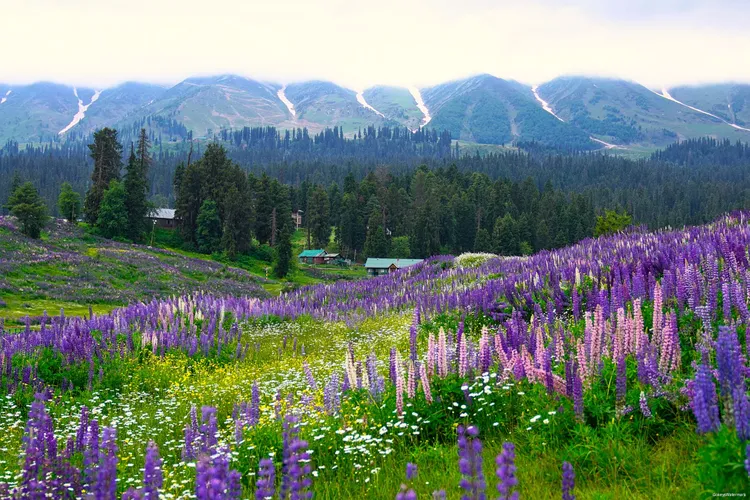
Best time to visit: flowers month by month
| Month | What you see | Crowd | Our view |
|---|---|---|---|
| June | Snow patches, first small flowers, green shoots | Low | Good for snow lovers; few flowers |
| July | Valley turns green; flowers start blooming fast | Medium | Very good from the second week |
| Early to mid-August | Peak bloom, carpets of flowers, mist and clouds | High | Best time for flowers |
| Late August to September | Still green, fewer flowers, clearer skies | Medium | Good for photography |
| October | Grass turns golden brown, very few flowers | Low | Quiet; good views; cold mornings |
Our recommendation: plan for the last week of July to the third week of August. Keep 1 buffer day for monsoon road delays.
Flowers you may see
- Himalayan blue poppy (rare, in some years near the higher end)
- Cobra lily
- Primula and potentilla
- Himalayan balsam and geranium
- Marsh marigold and anemone
- Brahma Kamal (the state flower, more common near Hemkund Sahib)
How to reach the Valley of Flowers
Step 1: Haridwar or Rishikesh to Govindghat
Govindghat is about 270 km from Rishikesh on the Badrinath highway, via Devprayag, Srinagar, Rudraprayag, Karnaprayag, Chamoli and Jyotirmath (Joshimath). It is a full-day drive of 10 to 11 hours. Most people break the journey at Jyotirmath or drive one long day.
- Nearest railway stations: Rishikesh (Yog Nagari) and Haridwar
- Nearest airport: Jolly Grant, Dehradun
Step 2: Govindghat to Pulna by road
From Govindghat, shared jeeps run about 4 km up to Pulna, where the walking trail begins.
Step 3: Pulna to Ghangaria trek
The trail to Ghangaria is a paved, wide path about 9 to 10 km long, climbing gently along the Lakshman Ganga river. It takes 5 to 7 hours. Ponies, porters and pithus (people who carry you in a basket) are available at Pulna at fixed government rates.
A helicopter service between Govindghat and Ghangaria runs in season when the weather allows. It is weather-dependent and often delayed in the monsoon, so do not depend on it for a fixed schedule.
Step 4: Ghangaria to the Valley of Flowers
From Ghangaria the trail splits. The left path goes to the Valley of Flowers, the right one to Hemkund Sahib. You pay the entry fee at the forest checkpost, about 500 m from Ghangaria. The walk to the valley entrance is about 3 to 4 km, and from there you can walk deeper inside for another 2 to 5 km. Most people spend 5 to 7 hours in the valley.
Entry fee, permits and park rules
- Entry fee: ₹150 for Indian visitors and ₹600 for foreign nationals (2026 season), valid for up to 3 days. The permit can be bought at the forest counter in Ghangaria, and online booking has also been made available.
- Entry timings: 7 am to 2 pm. All visitors must leave the park by 5 pm.
- No camping or night stay inside the valley.
- No plucking flowers or plants.
- No drones and no single-use plastic.
- Carry an ID card (Aadhaar for Indians, passport for foreigners).
Suggested 6-day itinerary from Haridwar
| Day | Plan | Stay |
|---|---|---|
| 1 | Haridwar/Rishikesh to Jyotirmath or Govindghat (about 270 km) | Jyotirmath |
| 2 | Drive to Pulna, trek 9 to 10 km to Ghangaria | Ghangaria |
| 3 | Full day in the Valley of Flowers | Ghangaria |
| 4 | Trek to Hemkund Sahib and back (6 km each way, steep) | Ghangaria |
| 5 | Trek down to Pulna, drive to Badrinath (darshan) or Jyotirmath | Badrinath |
| 6 | Drive back to Haridwar/Rishikesh | — |
If you have one more day, spend a second day in the valley. The flowers look very different in sun and mist.
Where to stay
- Ghangaria: simple hotels, guesthouses and a Gurudwara with free langar and basic rooms. Electricity and hot water can be limited. Book early for July and August.
- Govindghat and Jyotirmath: hotels for the nights before and after the trek.
How difficult is the trek?
The trek is easy to moderate. The path is well made, but walking 10 km uphill to Ghangaria takes effort, and the trail is wet and slippery in the monsoon. Anyone who can walk 5 to 6 km on normal roads without trouble can usually do it slowly. Children above 8 years and fit seniors manage well with ponies as backup.
The Hemkund Sahib climb from Ghangaria is much steeper. Read our Hemkund Sahib travel guide for details.
What to pack
- Good waterproof trekking shoes (very important in the monsoon)
- Poncho or rain jacket, and rain cover for your bag
- Quick-dry trousers and T-shirts, a fleece and a light down jacket
- Trekking pole
- Water bottle, dry snacks, ORS
- Personal medicines and a small first-aid kit
- Power bank (charging can be limited in Ghangaria)
- Cash; ATMs are not reliable after Jyotirmath
Practical tips
- Mobile network: patchy. Jio and BSNL may work in Ghangaria but not on most of the trail.
- Weather: rain is likely on most days in July and August. Start early, as mornings are clearer.
- Road closures: monsoon landslides on the Badrinath highway can cause delays of hours or a day. Keep one buffer day.
- Leave no trace: carry all wrappers back with you.
Plan your Valley of Flowers trip with Gokeys
We arrange the drive from Haridwar or Rishikesh, hotels in Jyotirmath and Ghangaria, and pony or porter support for the trek. Ask us about a Valley of Flowers and Hemkund Sahib trip or contact us for July–August dates.