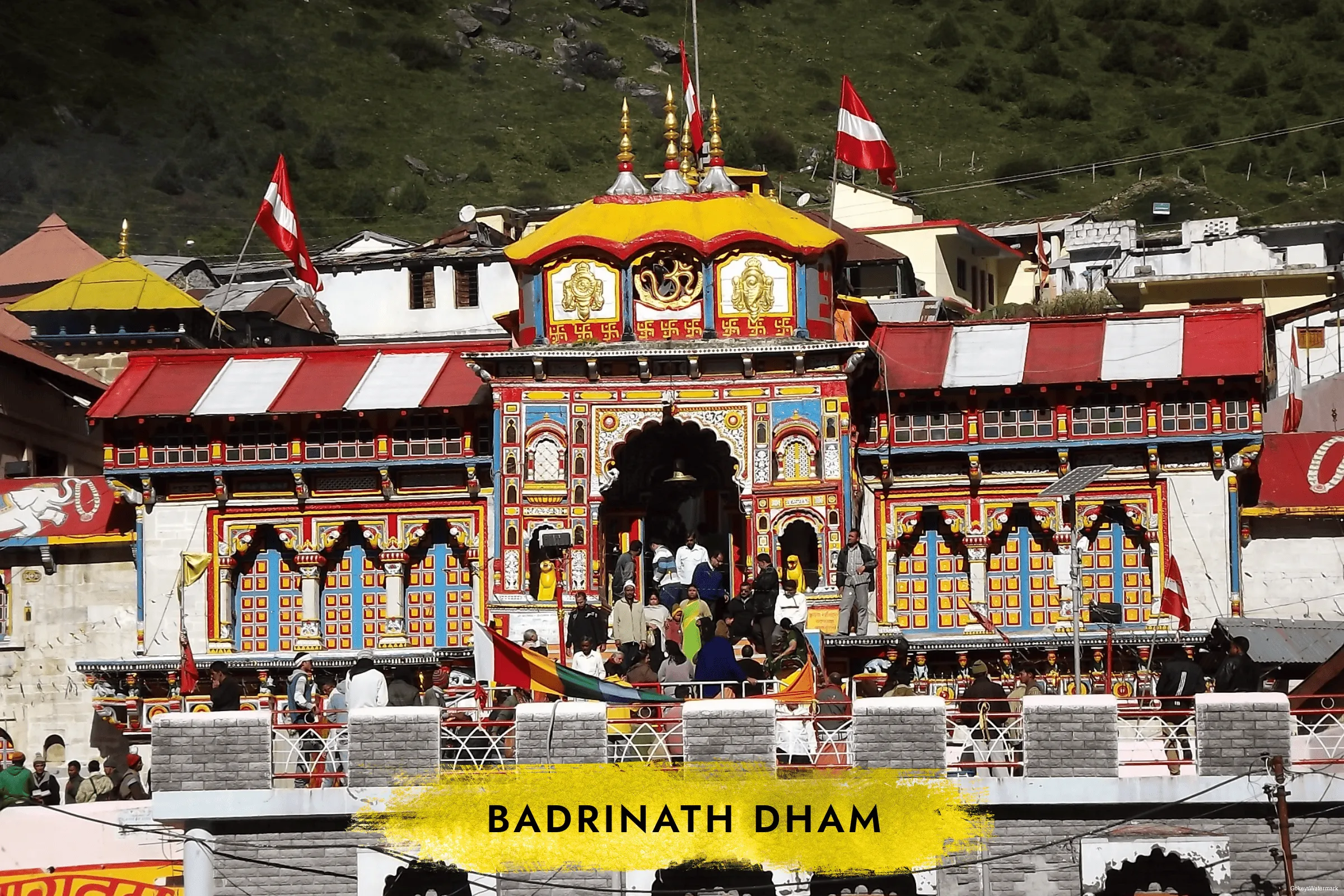
Badrinath is the easiest of the Char Dham shrines to reach by road. There is no trek: you drive right up to the town, which sits at about 3,100 metres on the Alaknanda. The catch is the distance. Badrinath is roughly 320 km from Haridwar and about 45 km beyond Joshimath, so most families plan two days up, one day at the shrine and one day back, with a night at Joshimath or Pipalkoti on the way. The 2027 opening date has not been announced yet; it is declared on Basant Panchami in early 2027. Registration is free and mandatory. This guide covers what is confirmed, how to get there, how long it takes and what to budget.
What is confirmed for 2027 and what is not
| Item | Status for 2027 | What we know |
|---|---|---|
| Opening date | Not yet announced | Declared on Basant Panchami. In 2026 the doors opened on 23 April at 6:15 AM; in 2025 on 4 May. |
| Closing date | Not yet announced | Declared on Vijayadashami. In 2026 the doors close on 16 November at 9:37 PM. |
| Registration | Not yet announced | In 2026 online registration opened on 6 March and was free; offline counters opened on 17 April. |
| Winter seat | Tradition | The deity is worshipped at the Narsingh Temple in Joshimath in winter. |
| Road and gate conditions | Check closer to travel | See "Road conditions" below. |
The 2026 dates are history, shown to help you plan the season. We update this page when the committee announces the 2027 dates. For all four Dhams together, see our Char Dham Yatra 2027 guide.
Registration
Registration is compulsory and free for all pilgrims on the Uttarakhand government's Registration and Tourist Care portal or its app. You need a photo ID (Aadhaar for Indian pilgrims), a mobile number, travel dates and details of everyone travelling. Keep the registration letter or QR code with you. Wait for the 2027 window to open; our registration guide is updated the same day.
How to reach Badrinath
By road, always. There is no railway or airport at Badrinath. The nearest railhead is Rishikesh, and the nearest airport is Jolly Grant in Dehradun.
| From | Road distance (approx.) | Time (approx.) | Practical plan |
|---|---|---|---|
| Haridwar | 320 km | 10–12 hours | Halt at Joshimath or Pipalkoti on Day 1 |
| Rishikesh | 295–300 km | 9–11 hours | Same road, minus the first 25 km |
| Dehradun / Jolly Grant | 310–330 km | 10–12 hours | Fly in, drive the next day |
| Delhi | 525–540 km | 14–16 hours | Break the trip at Haridwar or Rishikesh |
| Joshimath | 45 km | 1.5–2 hours | The last leg of the climb |
Distances differ slightly by source and route. Drive times in May and June, or after rain, can stretch by several hours.
The route. From Haridwar the road goes to Rishikesh, then follows the Ganga to Devprayag and the Alaknanda to Srinagar, Rudraprayag, Karnaprayag, Nandaprayag, Chamoli, Pipalkoti and Joshimath. Beyond Joshimath it climbs through Vishnuprayag and Pandukeshwar to Badrinath. The Panch Prayag stops are worth a short break each; our Panch Prayag guide maps them, and the Devprayag guide covers the first. Dhari Devi temple near Srinagar is another common stop; see our Dhari Devi page.
Road conditions. The Joshimath–Badrinath stretch is scenic but prone to landslides, and vehicle movement beyond Joshimath can be regulated by gate timings in some seasons. Cross Joshimath in the morning, ask your driver or hotel about current gate timings (generally 5Am to 8 PM), and keep a buffer day if rain is forecast.
Suggested itineraries
3 days from Haridwar (the fast version). Day 1: Haridwar to Joshimath (about 280 km, 8–9 hours), stopping at Devprayag and Rudraprayag. Day 2: leave Joshimath by 5:00–6:00 AM for Badrinath, bathe at Tapt Kund, have darshan, then visit Mana Village and return to Joshimath or Pipalkoti. Day 3: drive back to Haridwar (10–11 hours). This is the pattern behind our 3-day Badrinath package.
4 days (a more comfortable plan). Day 1: Haridwar to Pipalkoti or Joshimath. Day 2: Badrinath darshan, Tapt Kund, Mana and Vasudhara trail start, and a night at Badrinath. Day 3: early morning aarti, drive back to Pipalkoti or Rudraprayag. Day 4: return to Haridwar. Suitable for senior citizens and anyone who wants more time at the shrine.
5 or 6 days with Kedarnath. Many pilgrims combine Badrinath with Kedarnath. Our Kedarnath Badrinath Do Dham tour does this in six days, and our Kedarnath to Badrinath route guide explains the long drive between the two. For Kedarnath planning, see our Kedarnath Yatra 2027 guide.
What does Badrinath Yatra cost?
There is no single price. These are the building blocks.
Assumptions: 3 nights from Haridwar; six people sharing a cab and rooms; breakfast and dinner; 2026 prices, since 2027 rates are not yet published.
| Component | Indicative cost | Basis |
|---|---|---|
| Road package from Haridwar | Gokeys' 3-day Badrinath package was listed from ₹6,500 per person in 2026; the 6-day Kedarnath–Badrinath tour from ₹12,500 | Our Listing |
| GST | 5% on packages | As stated on Gokeys pages |
| Puja and special darshan | Fees set by the Badrinath–Kedarnath Temple Committee | See our puja booking guide |
| Meals, snacks, tea, personal spending | A few hundred rupees per day | Varies |
| Helicopter option | Not a standard Badrinath option; see the Kedarnath helicopter article | n/a |
If you travel on your own by car, the main costs are fuel, tolls, a driver if you have one, hotels and meals. Room prices rise in May and June and around long weekends, so booking early matters.
Best time to go and weather
Badrinath is open roughly from late April or May to mid-November. May and June are clear and cold, with the heaviest crowds. July and August are monsoon, with landslide risk and slower roads. September to early November are calmer with colder nights and mornings; snowfall can start by late October. Even in June, nights at the shrine are close to freezing. Carry thermals, a rain jacket and a warm cap in every month.
Darshan at Badrinath
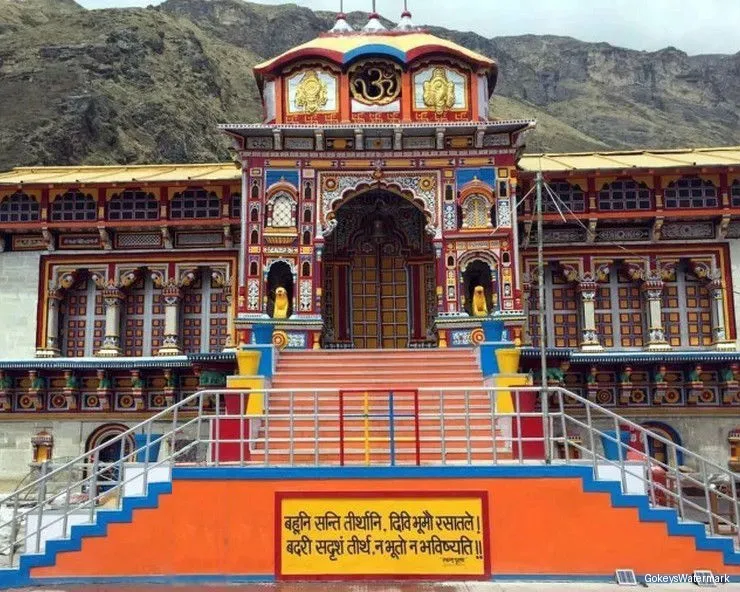
The temple is dedicated to Lord Vishnu as Badrinarayan. Pilgrims usually bathe in the hot spring at Tapt Kund before darshan. Queues are shortest early in the morning and longest on weekends and in the peak weeks of May and June. Daily darshan and aarti timings can change with the season and with festivals, so check at the temple on arrival. For history, rituals and the temple's setting, see our Badrinath temple guide. For special pujas, see the puja booking guide.
Where to stay
Badrinath has rooms in guest houses, ashrams, dharamshalas and GMVN and temple-committee properties, but supply is limited and fills early in the peak season. Most groups stay at Joshimath (45 km before; more hotels, ATMs, medical facilities) or Pipalkoti (about 70–75 km before; quieter) and make the final climb in the morning. Staying overnight in Badrinath gives a calmer evening aarti and morning darshan but means a cold night at height. Our Joshimath page has more.
Nearby sightseeing
- Tapt Kund and Brahma Kapal: the hot spring below the temple and the ghat where pilgrims offer pind daan
- Mana Village: about 3 km away, close to the Tibet border; see our Mana Village page, with Vyas Gufa and Bhim Pul
- Vasudhara Falls: reached by a walk beyond Mana (about 4–5 km; skip if you are short on time or have knee or breathing problems); see the Vasudhara guide
- Charan Paduka, Narad Kund and Neelkanth view: short stops around the town
- On the way: Pandukeshwar, Vishnuprayag, Narsingh Temple in Joshimath and Panch Prayag
- If you have more days: the Valley of Flowers and Hemkund Sahib via Govindghat; see our Valley of Flowers guide and Hemkund Sahib guide
Badrinath Yatra for senior citizens
Badrinath is the most senior-friendly Dham because you reach the temple by road. The real challenge is the long journey and the altitude of about 3,100 metres. Plan a 4-day trip with a rest night at Joshimath or Pipalkoti, avoid pushing for same-day returns, carry regular medicines and consult a doctor first if there is a heart, lung or blood pressure problem. Skip the Vasudhara walk. Request a comfortable vehicle with legroom and plan short stops every 2 hours. Our guide for elderly parents covers the whole Char Dham.
Travel tips
- Carry the registration letter, photo ID and a copy.
- Start early every day; avoid driving the hill road at night.
- Keep cash; ATMs and card machines can fail in remote stretches.
- Fill fuel at Rishikesh, Srinagar or Joshimath.
- Check weather and road status the evening before each leg.
- Keep your return connection a day later than the planned return.
Plan Badrinath with Gokeys
- Badrinath Yatra tour from Haridwar (3 days)
- Kedarnath Badrinath Do Dham tour (6 days)
- Kedarnath Badrinath group tour (fixed departures; the Kedarnath date is tentative until announced)
- Badrinath with Mussoorie, 6 days