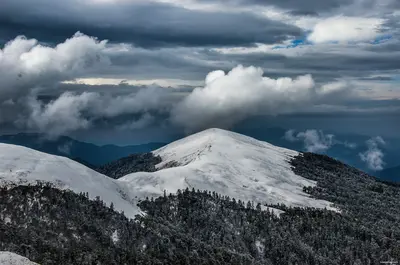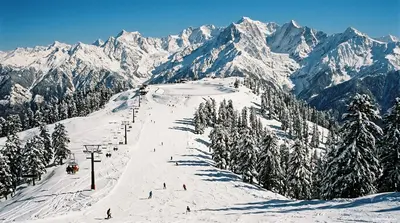
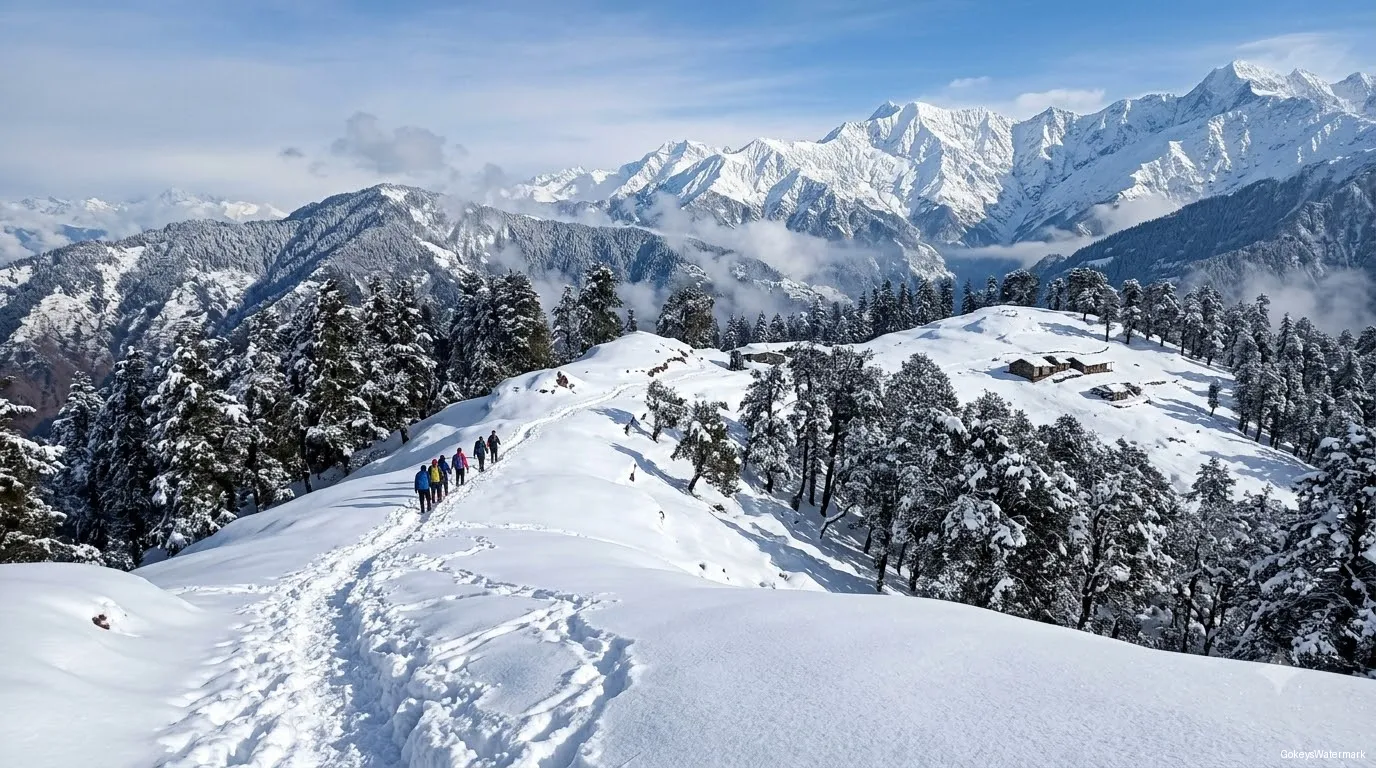
The best months to see snow in Uttarakhand are January and February, with the first snow often arriving in December at the higher places. Auli, Chopta, Harsil and Gangotri's valley get the most; Dhanaulti, Mussoorie, Chakrata and Nainital get snow only on some days. Snowfall varies every year, so treat any date as a good chance, not a promise.
Snowfall month by month
| Month | What to expect |
|---|---|
| November | Fresh snow on peaks above about 3,500 m. Most hill towns are dry and cold. Char Dham temples close. |
| December | First snow reaches Auli, Chopta and Harsil in many years, often in the second half. Clear skies and sharp views. |
| January | The best month for snow on the ground. Auli, Chopta, Harsil and the Dhanaulti and Chakrata hills can all turn white. |
| February | Snow stays at the highest places, and light snowfall can still happen lower down. Fewer tourists. |
| March | Snow melts below about 2,500 m. Auli skiing can continue early in the month. Rhododendrons start in the lower hills. |
Where it snows, by altitude
Height decides everything. The higher the place, the more snow and the longer it stays.
| Place | Height (approx.) | Snow chance | Guide |
|---|---|---|---|
| Auli | 2,500 to 3,000 m | High from Jan | Auli weather and snowfall |
| Chopta | 2,600 m | High, Dec to Mar | Chopta Tungnath Chandrashila trek |
| Harsil | 2,600 m | High, deep snow | Harsil Valley in winter |
| Kanatal | 2,600 m | Moderate | Mussoorie Dhanaulti Kanatal tour |
| Chakrata | 2,100 m | Moderate, some days | Chakrata travel guide |
| Dhanaulti | 2,300 m | Moderate, some days | Dhanaulti |
| Mussoorie | 2,000 m | Occasional | Mussoorie |
| Nainital | 2,000 m | Occasional | Nainital |
Haridwar, Rishikesh and Dehradun never get snow. They are the base for the trip, and winter days there are cool and pleasant.
Best places for snow, in more detail
Auli. India's best-known ski slope, with a ropeway from Joshimath and views of Nanda Devi. Snow is dependable from January. Read the skiing guide and check the ropeway status before you go.
Chopta. A meadow village in a forest, known as the mini Switzerland of Uttarakhand. It has quiet, cheap stays and a walk to Tungnath and Chandrashila. Tungnath temple is closed in winter, but the trail is open when the snow allows. See where to stay in Chopta and Auli.
Harsil. A river valley on the way to Gangotri with deep snow and apple orchards. Facilities are basic and the road can close after heavy snow. Read how to reach Harsil and where to stay.
Dhanaulti, Kanatal and Chakrata. The easy options if you have only a weekend or are travelling with children and parents. Snow is not certain, but frost, mist and clear Himalayan views are.
How to plan a snow trip
- Pick January or February if seeing snow is the main goal. December is cheaper and clearer but riskier for snow.
- Go higher. Choose Auli, Chopta or Harsil over Mussoorie.
- Stay 2 nights or more at one snow place so one cloudy day does not ruin the trip.
- Check the weather and road status 2 days before you leave.
- Keep a buffer day at the end for road delays.
Ready-made options: Auli and Chopta tour, Harsil tour, and the full list on our Uttarakhand winter packages page.
What not to expect
- Kedarnath, Badrinath, Gangotri and Yamunotri temples are closed in winter. See the winter Char Dham guide.
- Snow on the road is not snow for play. Roads are cleared and salted, and snow is deeper off the road.
- Not every day is white. Snow falls on a few days, then melts or stays depending on the sun.
Safety on snowy roads
- Travel with a local driver who has driven the route in winter.
- Start early and reach your hotel before dark.
- Do not drive on fresh snow at night. Black ice forms after sunset.
- Carry warm clothing and a power bank in the car.
Why it snows in the Himalaya in winter
Most winter snow in Uttarakhand comes from western disturbances, which are weather systems that travel in from the west and meet the Himalaya between December and March. When one arrives, the higher ranges get snow and the plains below may get rain and fog. A winter with several strong disturbances gives deep snow. A dry winter gives little, whatever the date. This is why no one can promise snow weeks ahead.
The snow line, meaning the height where snow settles, also changes with each system. A cold system can bring snow down to around 1,800 to 2,000 m, which is how Mussoorie and Nainital sometimes turn white. A milder one stops above 2,500 m.
Fresh snowfall, snow on the ground, and sunshine
These are three different things, and many trips go wrong because people mix them up.
| What you want | What it means | Best time |
|---|---|---|
| Watching snowfall | Snow actually falling while you are there | Hard to plan. Stay 2 to 3 nights at a high place and wait. |
| Snow on the ground | White meadows, roofs and trees | Days after a snowfall, at the right height |
| Clear mountain views | Sunny sky after snow | The 1 to 3 days after a system clears |
The best-looking days are often the day after a snowfall, when the sky clears and the peaks show. A cloudy snowfall day gives atmosphere but no views.
How long snow stays
- Above 3,000 m: weeks to months, as long as it stays cold.
- Between 2,500 and 3,000 m: days to weeks. South-facing slopes melt first.
- Around 2,000 m: often only one or two days.
This is why Dhanaulti and Mussoorie are a gamble but Auli and Chopta are not.
Snowfall in Kumaon
Not all snow in Uttarakhand is in Garhwal. Kumaon places such as Kausani, Binsar, Ranikhet and Chaukori can see light snow in January and February, and their value is the view: the Himalayan range from Nanda Devi to Trishul on a clear morning. Use them if you want views, a lake town and fewer people, not guaranteed snow. See the Almora guide and the Kainchi Dham guide.
Snowfall in the pilgrim valleys
Kedarnath, Badrinath, Gangotri and Yamunotri receive heavy snow, but their temples are shut and the roads are not safe for visitors. The deity is worshipped at the winter seats, and you can visit those: Ukhimath for Kedarnath, Joshimath and Pandukeshwar for Badrinath, Mukhba for Gangotri and Kharsali for Yamunotri. See the winter Char Dham guide. Do not plan to see snow at the Char Dham temples between November and April.
How to track snow before you go
- Two weeks out: look at the general outlook for a western disturbance. This is only a hint.
- Five days out: check the Indian Meteorological Department (IMD) forecast for Dehradun and the specific district: Chamoli, Rudraprayag or Uttarkashi.
- Two days out: call your hotel and ask about road and power conditions. Local staff know the situation better than any app.
- On the day: ask the driver about the road at the last town before the climb.
A useful rule: if a heavy snowfall alert is issued for your district on the days you travel, shift the trip by a day or two rather than driving into it. Safety matters more than the schedule.
Road conditions and snow
Snow brings road closures, and the closures matter more than the snow itself.
- After heavy snowfall, roads to Auli, Chopta, Harsil and Dhanaulti may close for hours or days until clearing crews arrive.
- After sunset, wet roads freeze, and black ice is the main danger on shaded curves.
- Landslides can happen on the Rishikesh to Joshimath and Rishikesh to Uttarkashi highways, especially after rain.
- Cars without winter experience struggle on snow. Use a local driver.
This is the main reason to keep a buffer day and not book a same-evening flight or train after a snow trip.
What you can do in the snow
- Snow walks, meadow walks and short treks
- Photography at sunrise, when frost and the light are at their best
- Skiing and slope activities at Auli, when open
- A hot meal at a village dhaba, such as Garhwali dal, rice and local greens
- Bonfire evenings at hotels that offer them
- Temple visits at the winter seats
For kids, a snowfall day is an event on its own. For seniors, the best snow experience is often a sunny balcony and a cup of tea.
Snow trip checklist
- Thermals, fleece, down jacket, waterproof outer layer
- Gloves, cap, thick socks, waterproof shoes with grip
- Sunglasses and sunscreen, since snow glare burns the skin
- Power bank and a charged phone with offline maps
- Basic medicines, lip balm and moisturiser
- A small bag of dry snacks and water for the road
For the full list for Auli and Chopta, use our packing list.
Common myths about snowfall in Uttarakhand
- "It always snows in January at Mussoorie." No. Some years it does not.
- "Auli has snow all winter." Not always. Some seasons are dry until January, and artificial snow at the slope is not the same as natural snow.
- "More days means more snow." Only more chances. Staying two nights at a high place beats four nights at a low one.
- "Winter is too cold for travel." With layers and planning, it is one of the best seasons for clear views.