Nobody comes to Harsil for the hotels. The rooms are simple, the number of properties is small, and the real luxuries are the view from the window and the silence at night. But where you sleep still shapes the trip more than people expect. A room with a heater and hot water on a January evening is a different experience from one without. A homestay run by a local family can give you the best meal of your journey. And a property that is closed on your dates, which happens often in winter, can leave you scrambling.
This guide explains where to base yourself, the main types of stay, how the choice changes with the seasons, and what to ask before you book. We don't name individual hotels here because availability changes, and we only recommend properties our team has confirmed.
In this guide: Where to base yourself · Types of stay · By season · Questions to ask · Budget · Meals and facilities · Who should stay where · FAQs
Where to base yourself
Harsil village is the most convenient base: central, close to the river, and a good starting point for Lama Top and Mukhba. It is the right choice for first-time visitors and short trips, but rooms are few, so book early in season. Bagori is a quiet orchard hamlet that suits photographers and slow stays, though it is largely empty in winter. Dharali is livelier, close to the Sattal trailhead, and suits trekkers, but facilities are fewer, so check each property. Mukhba is a devotional village, not set up for tourist stays, so pilgrims should confirm access rules. And Uttarkashi, 3–3.5 hours before Harsil, is the town with the widest choice and the sensible winter buffer night, at the cost of extra driving on both days.
Types of stay
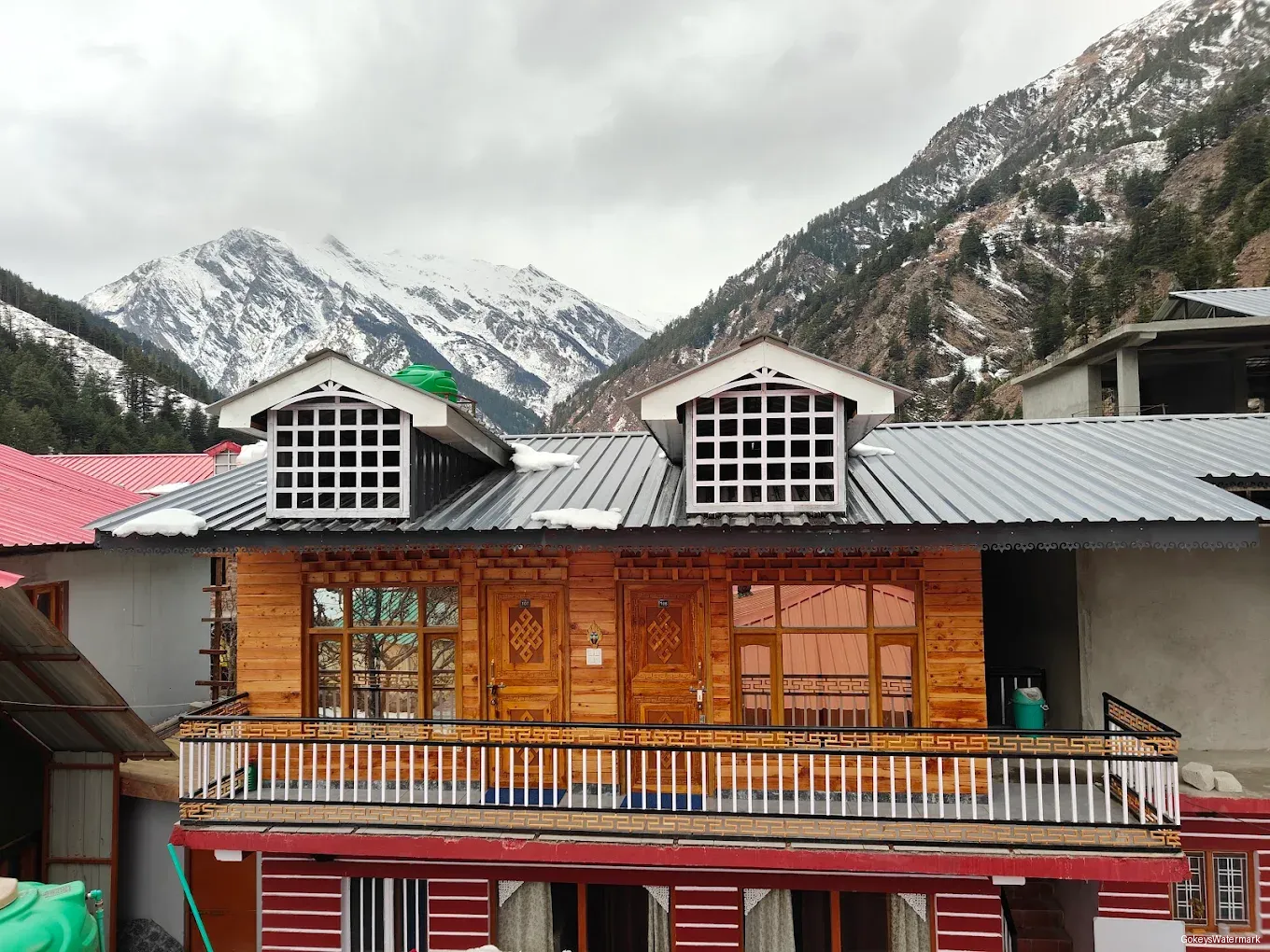
Homestays are run by local families and usually offer the warmest welcome and home-cooked pahadi food. Rooms are simple, and bathrooms may be shared in the cheapest ones. In winter, ask exactly how water is heated and whether the family is living on site.
Small hotels and lodges offer private rooms with attached bathrooms, a restaurant or set meals, and sometimes a heater. Quality varies a lot, so judge by recent photos and a direct phone call rather than listings alone.
Forest and government rest houses. The Forest Department and GMVN have historically run rest houses in the valley. Availability and booking rules change; confirm through the official office or portal.
Camps and cottages are seasonal, mostly April–June and September–October. They are excellent in good weather, but not a sensible winter choice unless the camp has proper insulation and heating.
How the choice changes by season
From March to June, most hotels, homestays and camps are open; book three to six weeks ahead for May and June. In July and August, many are open but guests are few, so choose a stay near the road with flexible cancellation. From September to mid-November, most are open and apple season brings visitors, so book early for October. From late November to February, a reduced set is open and some places close, so confirm by phone, ask about heating and backup power, and consider one night in Uttarkashi as a buffer.
Ten questions to ask before you book
- Are you open on my exact dates, and was this confirmed recently?
- Can a car reach the door, or is there a walk? How long and how steep?
- Is there a room heater or blower? Is it included or charged?
- How is hot water provided, and does it work in a power cut?
- Is there backup power (an inverter or generator)?
- Which meals are included, and at what times?
- Is there mobile network or Wi-Fi? (Often limited; do not rely on it.)
- What is the cancellation rule if the road is closed?
- Is the bathroom attached, and is there a western toilet?
- Which landmarks are walkable from the property?
What to expect for the price
Rates vary by season, room type and whether meals are included. Third-party sources suggest very roughly the bands below. They are not verified and sources differ widely, so publish a band only if Ops confirms it this season, with a date.
| Type | Indicative band per night | Typical features |
|---|---|---|
| Guesthouse | ₹800–₹1,800 | Basic rooms, simple meals |
| Homestay | ₹1,000–₹2,500 | Home-cooked Garhwali food, family setting |
| Government rest house (GMVN) | ₹1,500–₹2,500 | Simple rooms, river-side location [VERIFY booking route] |
| Resort / hotel | ₹3,000–₹6,000, with some sources quoting ₹4,500–₹8,500 | Better amenities, heater, meals on request |
For our own packages, we publish the price on the Harsil tour package page and explain what is included. Peak weeks (May–June, October and Christmas–New Year) cost more and sell out. Winter can be cheaper, but you pay with comfort and flexibility.
Meals and facilities
Harsil is a small village and stays are generally simple. One writer who visited counted roughly nine to ten guest houses, from budget to luxury, plus a few dhabas serving North Indian and Garhwali food. Most hotels and homestays offer set meals, often vegetarian, and a few serve meals on request. Carry packaged snacks for treks.
Mobile coverage is patchy (BSNL works in some pockets), Wi-Fi is weak, and card payment may not work, so carry cash from Uttarkashi. There is no large hospital in Harsil; for serious emergencies the nearest town is Uttarkashi. See how to reach Harsil Valley.
Who should stay where
Couples and first-timers will be happiest in a hotel or homestay in Harsil. Families with children should look for an attached bathroom, a heater in winter and a car at the door. Photographers will like Bagori or Harsil in October or April. Trekkers heading for Sattal or Gartang Gali do well in Harsil or Dharali and start early. If you are worried about winter roads, book the first night in Uttarkashi so a delay doesn't strand you. Pilgrims should follow the temple committee's guidance about accommodation near Mukhba.
Plan with Gokeys
Our packages include the stay, meals and a car from Haridwar. Tell us your dates and group size. See the Harsil tour package → · WhatsApp +91-90459-16770. For help choosing dates, see best time to visit Harsil, and for halts on the way, Uttarkashi and Harsil vs Uttarkashi.